Column · @landenvrht111
ADA Mobile Bathroom Requirements Every Rental Coordinator Ought To Testimonial
If you have actually ever before been accountable for restroom preparation at an event, short-term worksite, public gathering, or seasonal operation, you currently know exactly how rapid portable cleanliness decisions can end up being stressful. The pressure typically lands all at once. Head count adjustments. The site shifts. A delivery truck requires a different entrance. Then someone asks the question that must have been settled a lot previously: do we have the ideal easily accessible unit, in the appropriate place, established the best way?
That concern matters much past logistics. An ada portable toilet is not simply an additional line product on a rental order. It becomes part of whether guests, employees, attendees, and participants of the general public can utilize the site with dignity and self-reliance. When planners deal with access as a final add-on, they often wind up with a costly scramble and an arrangement that still drops short.
The great news is that the core requirements are not strange. They do, nevertheless, are worthy of cautious evaluation. A certified order has to do with greater than requesting for one bigger unit. Positioning, path, entryway conditions, recognition, and the variety of accessible devices in a cluster all issue. Those details are where rental plans usually do well or fail.
The need that gets missed most often
The factor I see neglected frequently is straightforward: when mobile single-user toilet systems are supplied in a cluster, at the very least 5 percent of the units in that collection must be accessible. That common applies also at temporary events.
That captures people unsuspecting because short-lived setups often get dealt with as informal. A coordinator might assume a weekend event, a temporary activation, or a pop-up procedures site has looser expectations than a permanent center. It does not work in this way. Temporary does not mean exempt. If you are generating a bank of single-user mobile commodes for public use, the available matter has to become part of the initial calculation.
This is where a great deal of small preparation mistakes begin. Somebody estimates eight basic units, then later on tacks on one ada available mobile restroom because it feels prudent. Occasionally that ends up pleasing the 5 percent minimum. Often the math https://pristineportablesil.com/festival-services/ adjustments when the order grows. If the cluster expands and nobody reviews the available count, the site can drift out of conformity without any person observing until delivery day.
The much better practice is to determine ease of access whenever the quantity adjustments. It appears noticeable, yet on hectic projects, the restroom matter is one of one of the most frequently revised numbers on the page.
"Available" is not just about device size
A larger cabin alone does not instantly please the ADA criteria. This is the second blunder that rental planners make under routine stress. They purchase what is defined in laid-back sales language as a handicap device, a wheelchair system, or a bigger trailer stall, and assume that is enough.
What in fact matters is whether the ada certified mobile toilet or ada mobile restroom fulfills the relevant technological demands. The government requirements call for obtainable portable commode systems to satisfy toilet-room technological needs, consisting of clearances, turning area, and door maneuvering clearances, in addition to appropriate guidelines for grab bars and water-closet clearances. The system has to likewise have an easily accessible entryway and be reached by an obtainable route. If ramps or touchdowns are needed, those attributes should comply with ADA technological demands as well.
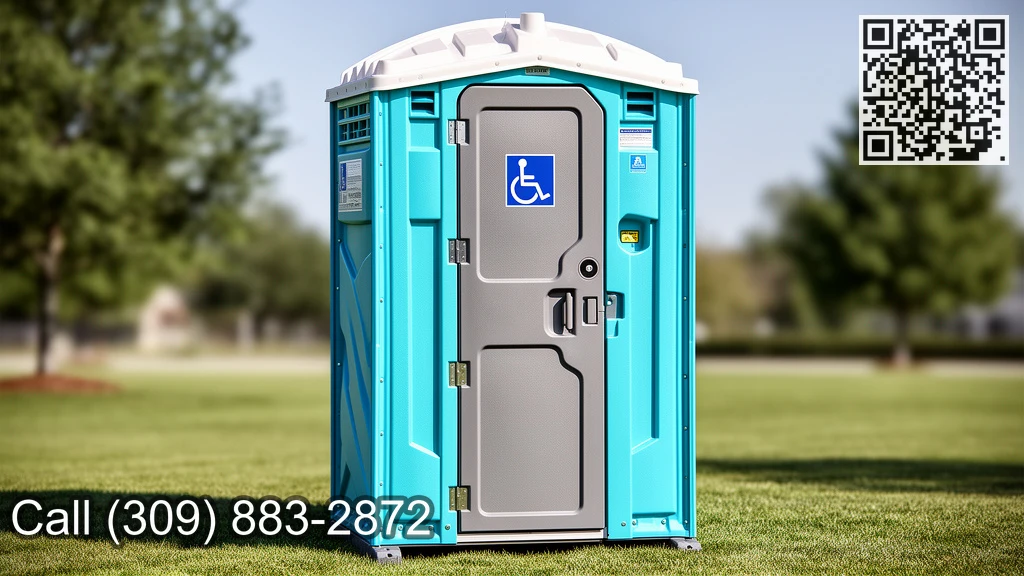
That implies access is about the entire individual experience from strategy to exit. A system can be marketed as an ada compliant easily accessible mobile restroom, however if it is dropped on a patch of ground that a wheelchair user can not sensibly reach, the arrangement still has an issue. The exact same holds true if the entry location is blocked, unsteady, or prepared in such a way that defeats the needed maneuvering space.
This is where experienced planners learn to quit thinking in regards to equipment just. The rented out device issues, obviously, however so does the website strategy around it.
The path to the device matters as high as the system itself
An available course is not an afterthought. It is just one of the core requirements, and on short-lived websites it is usually the hardest component to obtain right.
Portable washrooms are regularly placed where vehicles can discharge promptly, where they run out the visual facility of an event, or where solution access is simplest. Those sensible worries are real. Any individual who has managed washroom servicing recognizes the worth of tidy truck gain access to and effective positioning. However a place that benefits servicing is not immediately accessible for users.
A certified ada portable bathroom rental setup has to think about whether an individual making use of a mobility device or other mobility device can in fact get to the unit and enter it. If the route crosses uneven ground, soft dirt, a steep adjustment in grade, or short-term barriers, that can threaten the configuration. If a ramp or touchdown is part of the installment, it likewise has to follow the ADA technological rules.
That seems straightforward up until weather condition obtains included. I have seen flawlessly affordable website designs become pointless after a day of rainfall. Gravel changes. Grass softens. Temporary flooring panels buckle at their joints. None of that transforms the availability responsibility. It just implies the planner ought to have anticipated site problems earlier and examined them once more before opening.
This is one factor final restroom movings tend to develop problem. Relocating the systems to resolve one issue frequently creates an additional. A far better technique is to stroll the route from the user's perspective before the last positioning is approved.
Identification is not a small detail
Accessible mobile toilet units need to be identified with the International Symbol of Ease Of Access. That demand is simple to please, however it is surprisingly very easy to disregard when orders are customized in a thrill or when units are swapped near the distribution date.
The recognition matters for a sensible factor. Individuals need to be able to find the obtainable unit without presuming, without asking staff, and without evaluating every door in a row of portable restrooms. On a jampacked site, clear recognition saves time and lowers aggravation. It also signifies that accessibility was taken into consideration intentionally, not improvised.
I have seen easily accessible systems positioned behind fence runs, put too much from the rest of the cluster, or turned in a manner in which hides the determining icon from the main website traffic path. Even when the ideal system is technically present, bad positioning can make it functionally tough to locate. A coordinator who examines only the documents misses out on that reality.
Construction websites have a narrow exception, and it ought to not be overread
There is an essential nuance in the criteria that is worthy of care. The ADA standards identify mobile toilet units at building websites that are used solely by building and construction workers. Those devices are excluded from the portable-toilet access scoping requirement referenced in the 1991 standard.
That is a narrow factor, and organizers ought to beware with it. It does not erase access requirements for basic portable bathroom services, and it ought to not be extended to cover situations it was not meant to cover. If the rental is for more comprehensive public use or for settings outside that special construction-personnel context, the accessible-unit demand continues to be relevant.
This is a place where I often see confusion because people listen to "building and construction website" and quit listening to the rest of the sentence. The exclusive-use facet issues. So does the distinction in between a crew-only arrangement and a website that serves visitors, clients, assessors, or the general public. If an usage case drops outside the slim exemption, treating it as exempt can develop unnecessary lawful and functional risk.
Why momentary events are specifically vulnerable to mistakes
Permanent buildings usually have layers of testimonial. Drawings obtain checked. Facilities teams ask concerns. Ease of access problems are more probable to surface prior to opening up. Temporary mobile washroom setups seldom obtain that level of scrutiny, despite the fact that the legal criteria still apply.
Event preparation particularly often tends to compress choices into a short timeline. A sponsor wants an impact change. Food suppliers need even more area. Parking changes after permit evaluation. Safety demands barriers. Someplace in that churn, the toilet bank gets pushed to a corner that looked fine on a map and verifies unpleasant on the ground.
That is why many ada compliant portable restrooms problems are not remarkable failings. They are buildups of small oversights. The accessible system exists, however the path is poor. The count was appropriate on the first version of the order, however not after growth. The system satisfies the needed technological concept, however signage is not visible. Each issue looks small in seclusion. With each other, they leave customers with a frustrating or unusable setup.
An empathetic organizer learns to examine the arrangement with genuine individuals in mind, not simply with a website diagram.
What a careful testimonial need to cover before delivery
There is no demand to transform restroom getting right into a lawful seminar. Yet there does require to be a regimented testimonial prior to the vehicles roll.
A helpful pre-delivery check ought to validate the following:
- The variety of obtainable devices in each collection satisfies the 5 percent minimum for mobile single-user toilets.
- The selected ada certified mobile toilets are really intended to please ADA availability requirements, not merely described as larger units.
- The course to each accessible device comes, and the entrance condition sustains use.
- Any ramp or touchdown needed for accessibility is being handled in a manner that follow ADA technological requirements.
- The obtainable unit will be understood the International Icon of Access and positioned where customers can readily discover it.
That short evaluation catches the majority of the preventable mistakes I see in short-lived washroom preparation. It likewise aids different tools problems from site problems. Vendors can provide an ada-compliant portable toilet, yet the coordinator still controls where and exactly how that device is installed.
Vendor discussions that are worth having early
Many rental issues begin with unclear language. Someone requests a handicap unit. Someone else documents "ADA washroom." The order gets processed, however the assumptions stay blurry. Then the website team finds too late that they never validated the path, the recognition, or the amount of accessible systems were required in the cluster.
A much better supplier conversation is straight. Ask especially for an ada compliant portable toilet or ada-compliant mobile restrooms appropriate for the planned usage, and afterwards talk through the website problems. The factor is not to concern the vendor with every duty. It is to make certain everybody is addressing the exact same problem.
In practice, the best rental partnerships are the ones where the customer shares sufficient context. Is this a public occasion? A short-term operations site? A cluster near food solution? A vast site with several restroom banks? Those details form just how availability should be planned.
What you intend to avoid is the all-too-common scenario where the easily accessible system shows up, practically feeds on the billing, and still can not serve individuals well due to the fact that nobody talked about the positioning realities.
The phrase "simply obtain one ADA system" can lead you astray
That expression seems effective, however it can hide several various mistakes.
First, one ada handicap available portable restroom might not suffice if the cluster dimension has grown. Second, "one ADA unit" states absolutely nothing concerning whether it will be obtainable by an available route. Third, it does not address whether the unit is effectively recognized. Finally, if there are numerous toilet collections on a website, focusing on one easily accessible unit in one location can neglect the practical experience of customers who may be nowhere near it when they need it.
This is a judgment problem greater than a mathematical one. The requirements offer the structure, however real planning still calls for thoughtful placement. A site can fulfill the minimum matter requirement and still be discouraging if the easily accessible system is separated or tough to reach from significant task zones.
That does not indicate you invent additional guidelines. It means you utilize common sense within the established requirements. Availability should be integrated into the individual circulation of the website, not managed like an afterthought put behind an outdoor tents line.
Broader enforcement fads are a tip, not a distraction
Accessibility conformity is being imposed in a more comprehensive setting throughout fields. Recent federal support activity around digital availability for state and city government entities is a good pointer that ADA compliance is not inactive or symbolic. Various contexts have various due dates and technical concerns, but the bigger message coincides: ease of access obligations remain active and visible.
For rental organizers, the lesson is not that mobile toilet regulations transformed because of web availability advice. They did not. The lesson is that availability deserves continual focus throughout procedures, not occasional interest when a complaint shows up. Teams that comprehend this often tend to prepare much better in every momentary setting, due to the fact that they stop treating ADA problems as niche concerns.
I have observed a practical difference in between companies that assume by doing this and those that do not. The initial team asks ease of access inquiries during planning meetings. The second team inquires at delivery. By that point, options are narrower and expenses usually rise.
Common trouble areas on genuine sites
Most ease of access failures in mobile bathroom planning are not rooted in bad intent. They originate from normal project friction, especially when numerous vendors and area teams are moving quickly.
The problem areas I view most closely are these:
- A cluster count changes, yet no one recalculates the accessible-unit requirement.
- The accessible device is positioned on a path that looks passable theoretically however not in actual site conditions.
- A system is identified casually as ADA-capable without confirming that it is suggested to please appropriate availability requirements.
- The identifying accessibility sign is missing, obstructed, or difficult to see from the main approach.
- The group concentrates on distribution and maintenance convenience while overlooking the real customer method and entry experience.
None of these problems are exotic. They are common, avoidable, and costly to take care of late.
An organizer's mindset matters more than an ideal script
Every temporary site is a little bit different. An area fair has different constraints than a roadway race. A public jobs staging location differs from an outdoor wedding location. That is why rigid manuscripts typically fail. Still, the ADA basics for mobile bathrooms continue to be secure enough that every planner ought to keep them close at hand.
Think in collections, not simply private units. Assume in paths, not simply supply. Think in customer experience, not simply conformity wording. And when there is any type of obscurity concerning configuration conditions, solve it prior to the units are placed.
This sort of care tends to show up in small decisions. You examine the modified toilet count after participation estimates alter. You stroll the path after rain. You inspect that the icon is visible where people are actually originating from. You see whether a recommended area is technically available but almost awkward. That is what experienced planning appears like on the ground.
A correctly chosen ada portable restroom or ada-compliant portable toilet is not a politeness. It is a demand in the contexts where the requirements use, and it belongs to making a temporary site functional for every person who requires it.
Rental planners who review these details very early usually find that access is not the hardest part of the work. It is the component that rewards foresight. When it is taken care of well, individuals may hardly see. They just utilize the site as they need to have the ability to. Which peaceful normalcy is commonly the clearest sign that the preparation was done right.
 Ask ChatGPT
 Ask Grok
 Ask Perplexity
 Ask Claude
 Ask Google AI
 Ask You